Short, practical articles for MSMEs: what each tender term means, how the process works, and what to check before you bid. Every article follows our free Tender Foundations course.
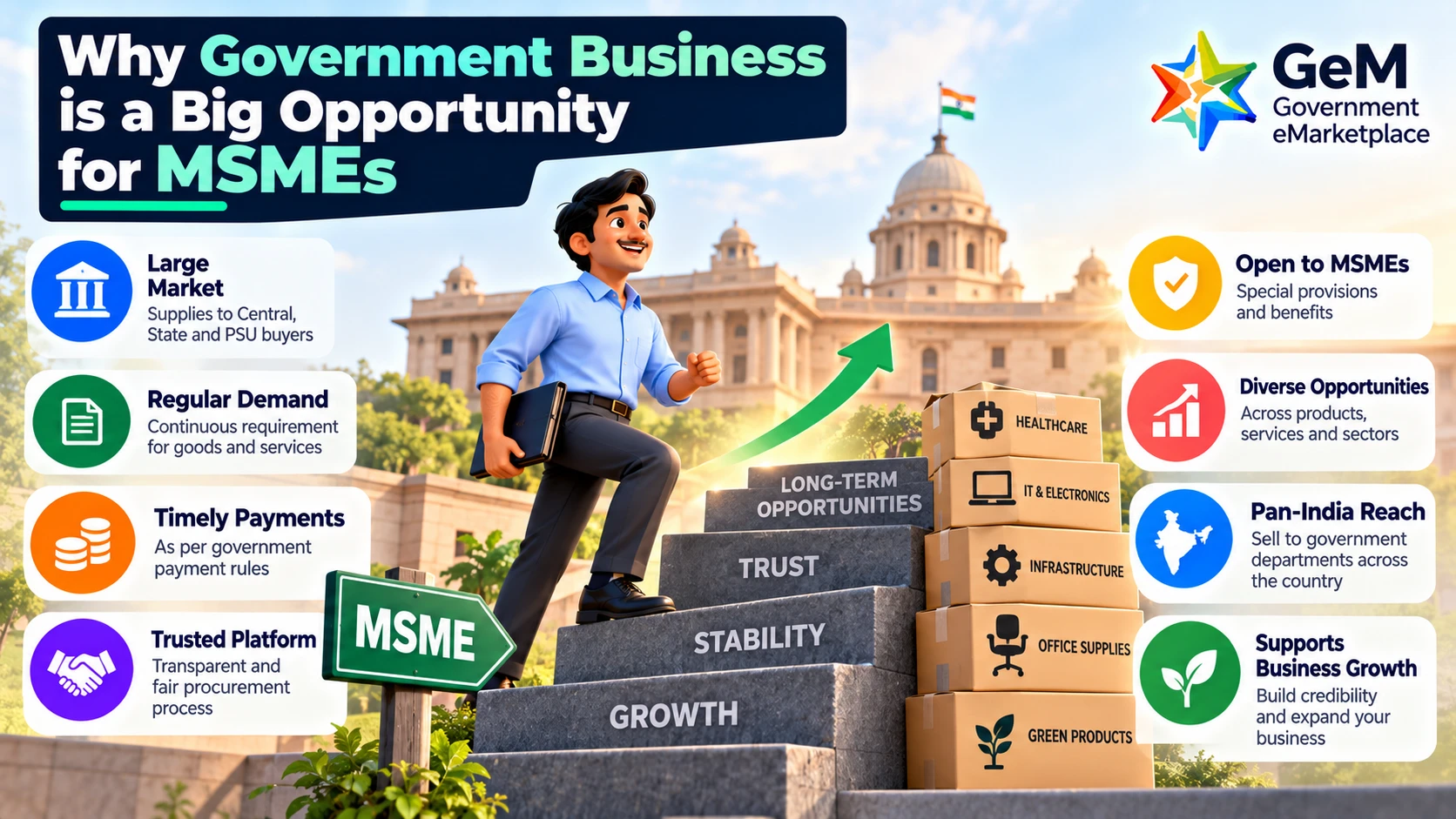
Why government business is a big opportunity for Indian MSMEs: what government buys, MSE benefits, the honest challenges, and how to start.
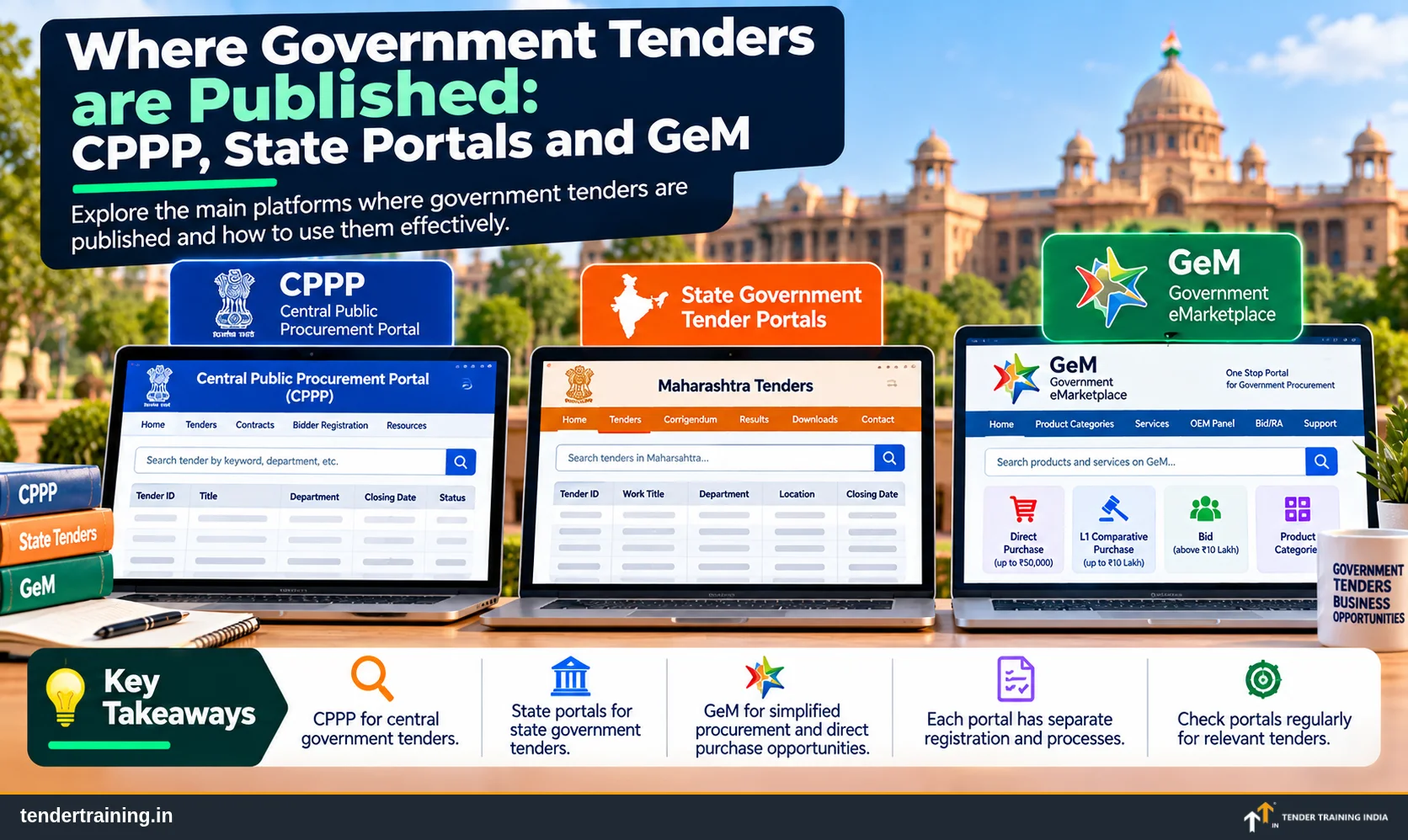
Where to find government tenders in India: GeM-CPPP, state portals, GeM, IREPS, defence and private tender search services — what each carries.

What is a tender? How government tendering works in India, explained with one simple example — key terms, where tenders are published, and how MSMEs start.

NIT (Notice Inviting Tender) explained: what it contains, how to read a real NIT quickly, and a 5-minute bid / no-bid checklist for MSMEs.
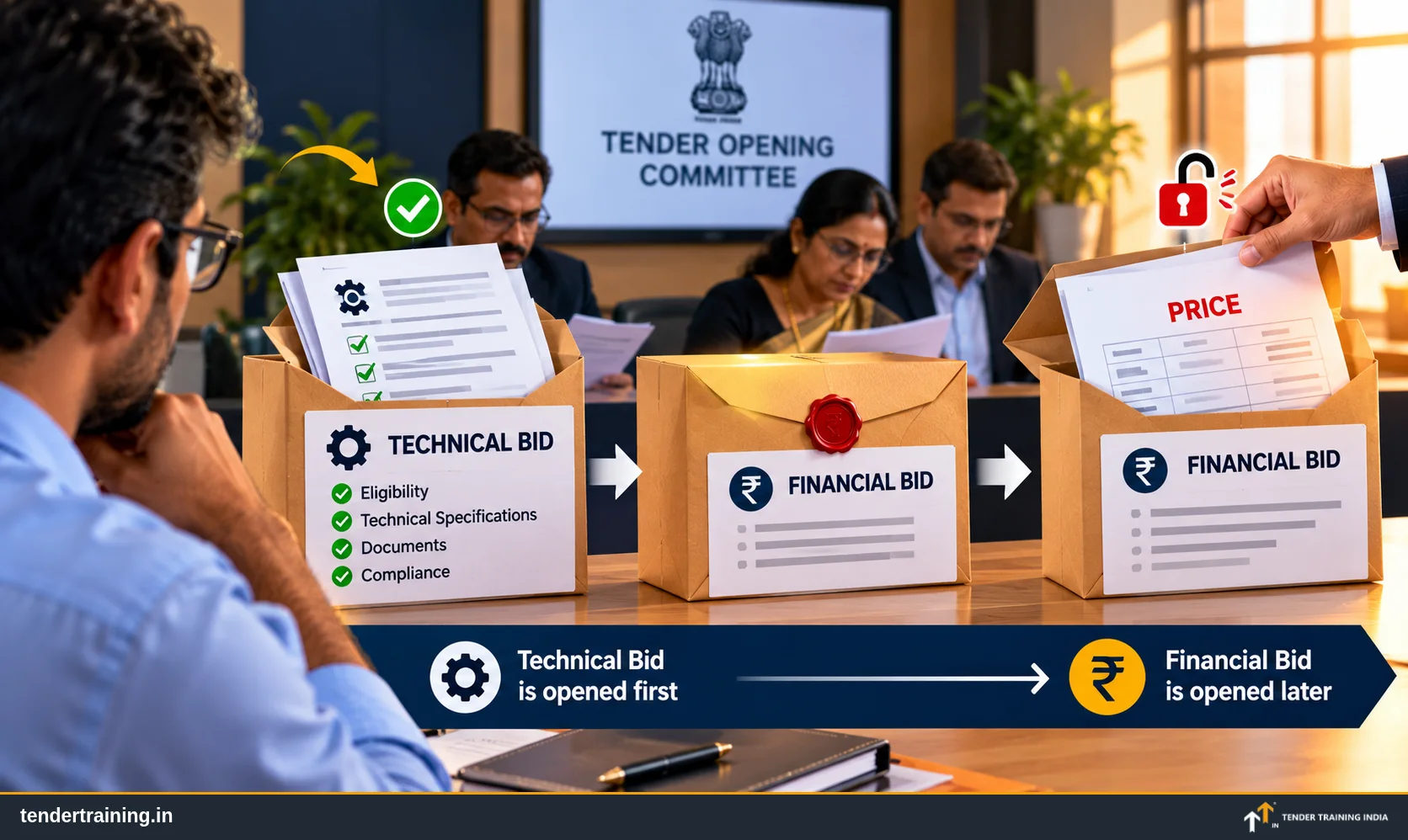
How the two-cover system works: what goes in the technical bid and the financial bid, how bids are evaluated, and the mistake that sinks good bids.
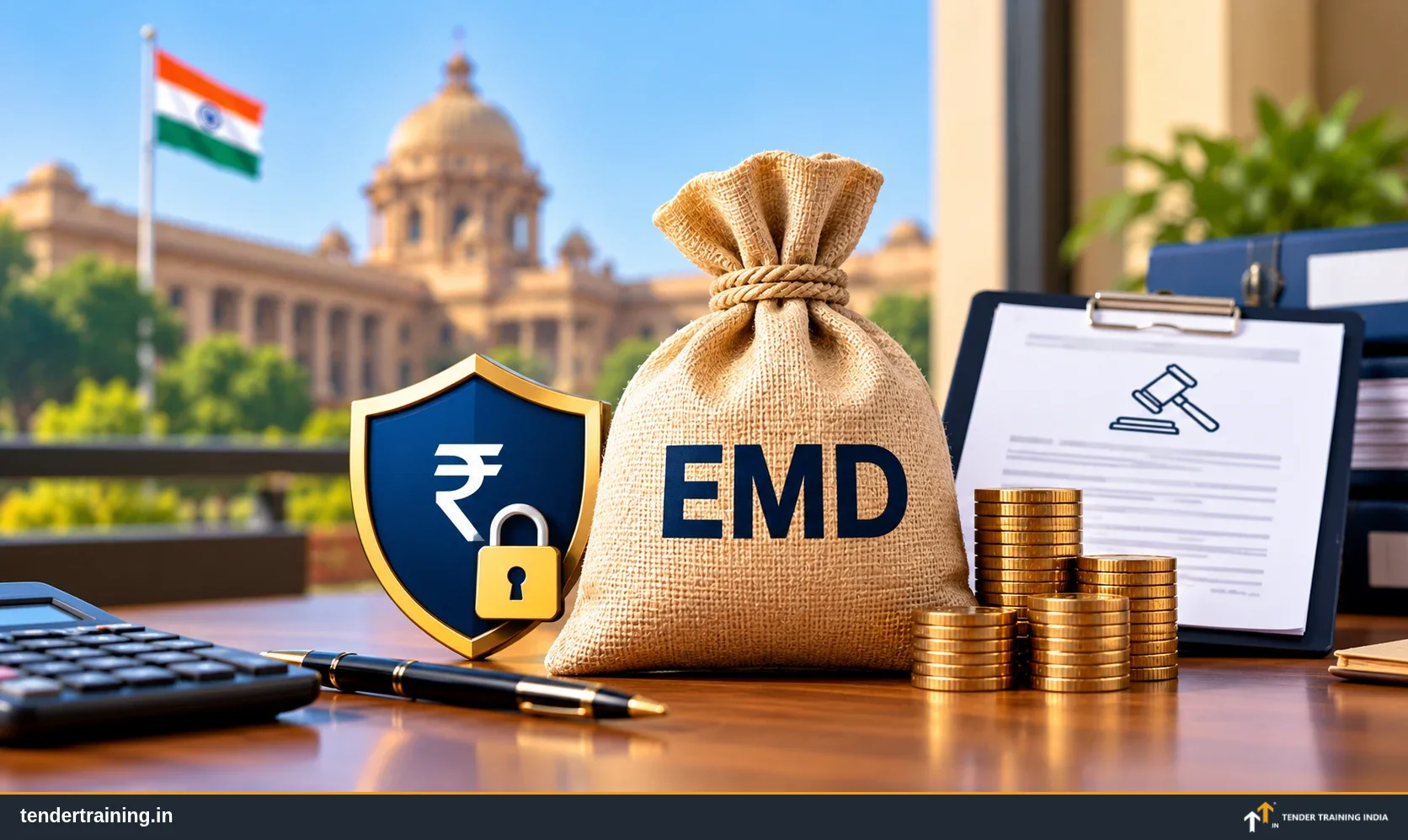
EMD (Earnest Money Deposit) explained: how much it is, how to pay, when it is refunded or forfeited, and who is exempted — with real tender examples.
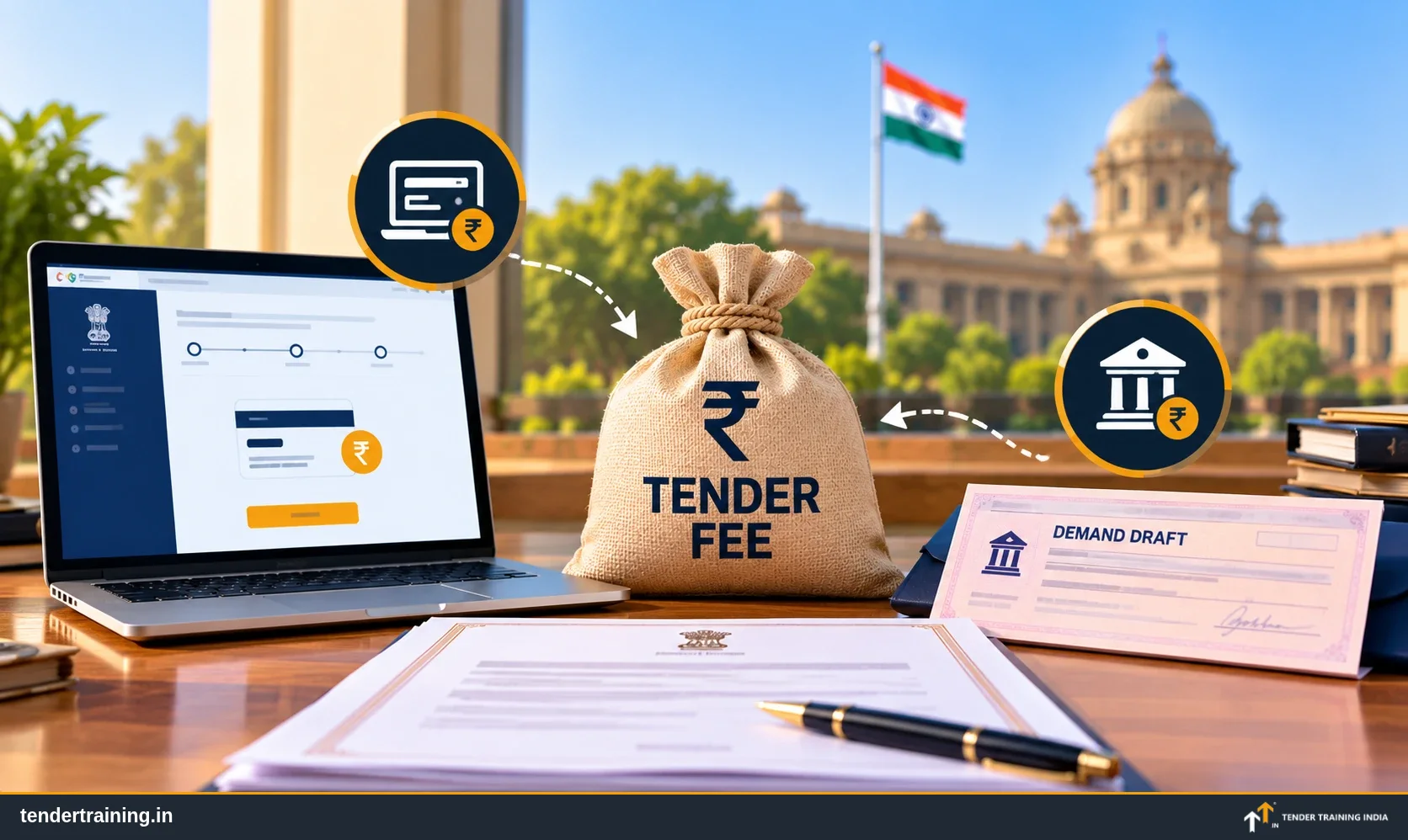
Tender fee explained: paying online or by DD, where to find it on a tender page, and when MSEs are exempted — five simple scenarios.
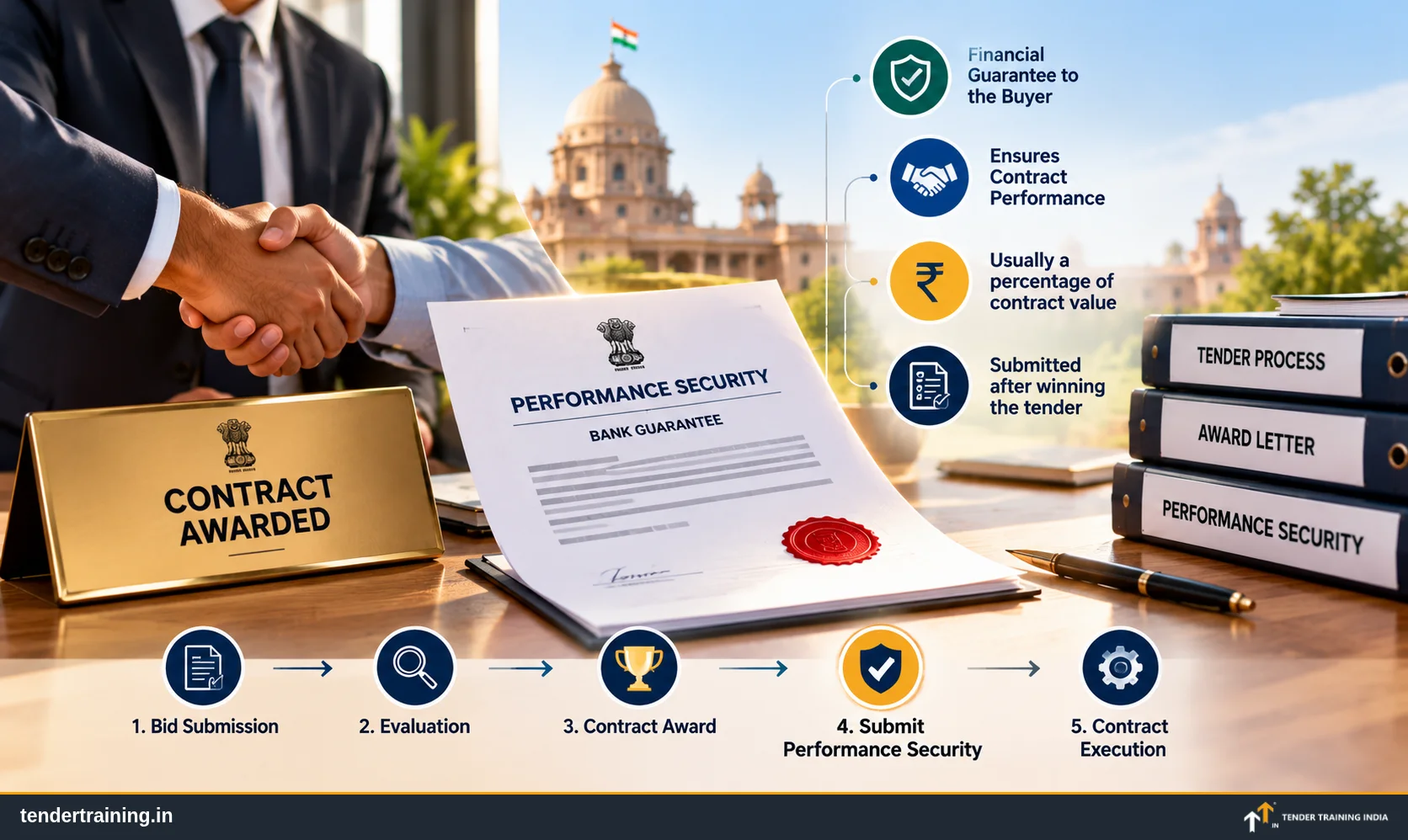
Performance security (PBG) explained: how much, in what form, how long it stays blocked, when you get it back, and when it can be forfeited.
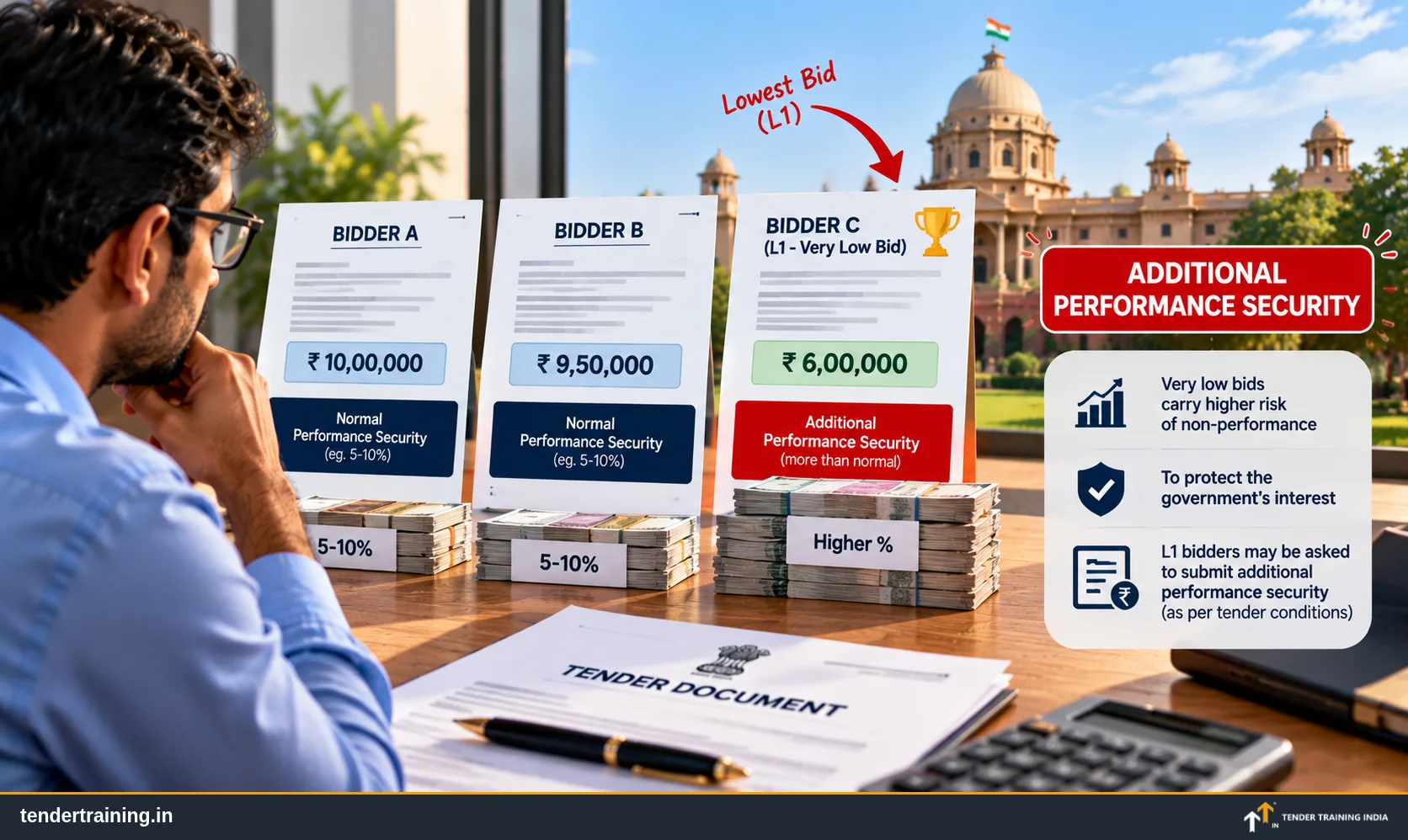
Why very low bids are asked for additional performance security, how it is calculated with a worked example, and how to plan before you quote.
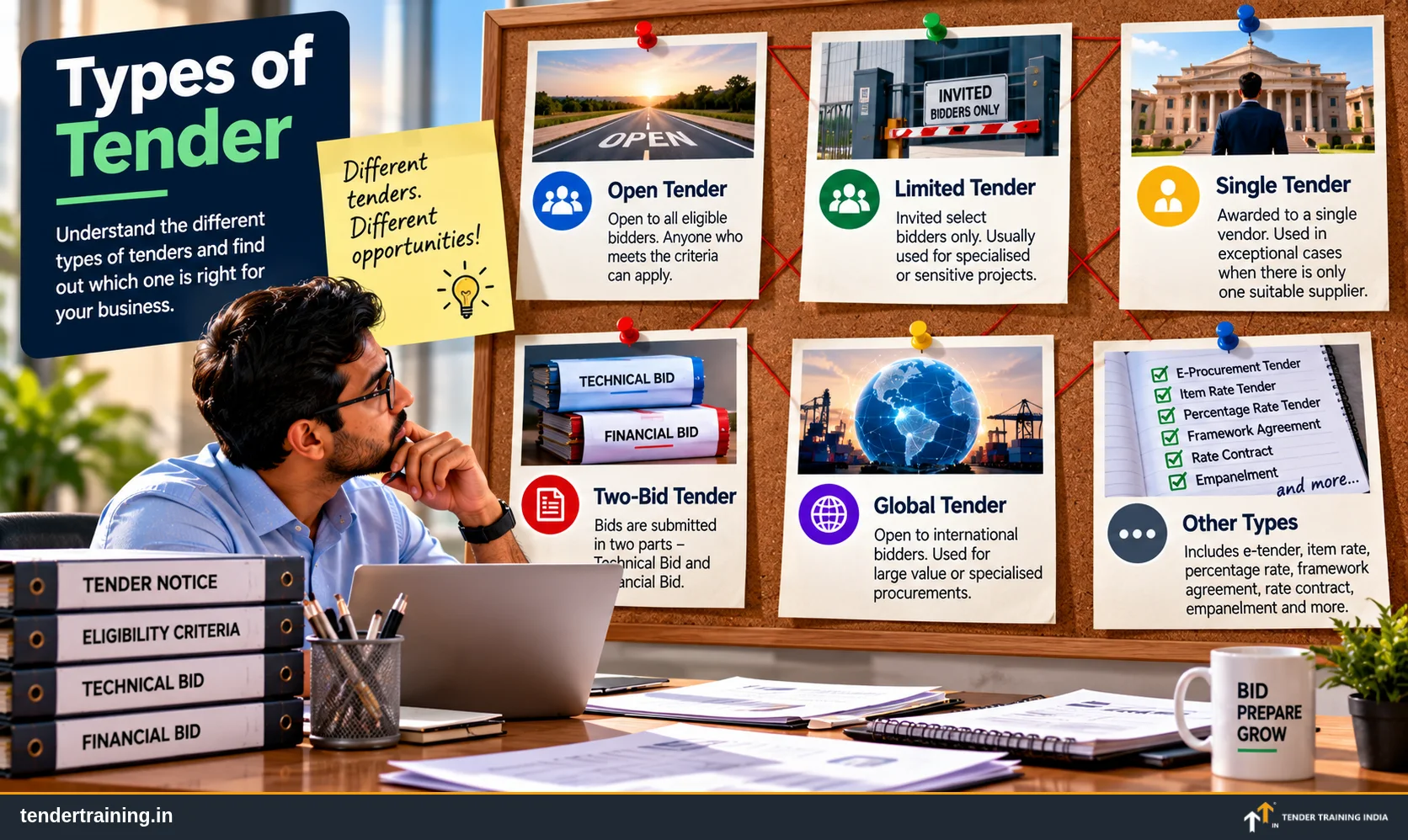
Types of tender in India explained: open, limited, single, global, two-bid, two-stage, EOI and rate contract — and what each means for you.
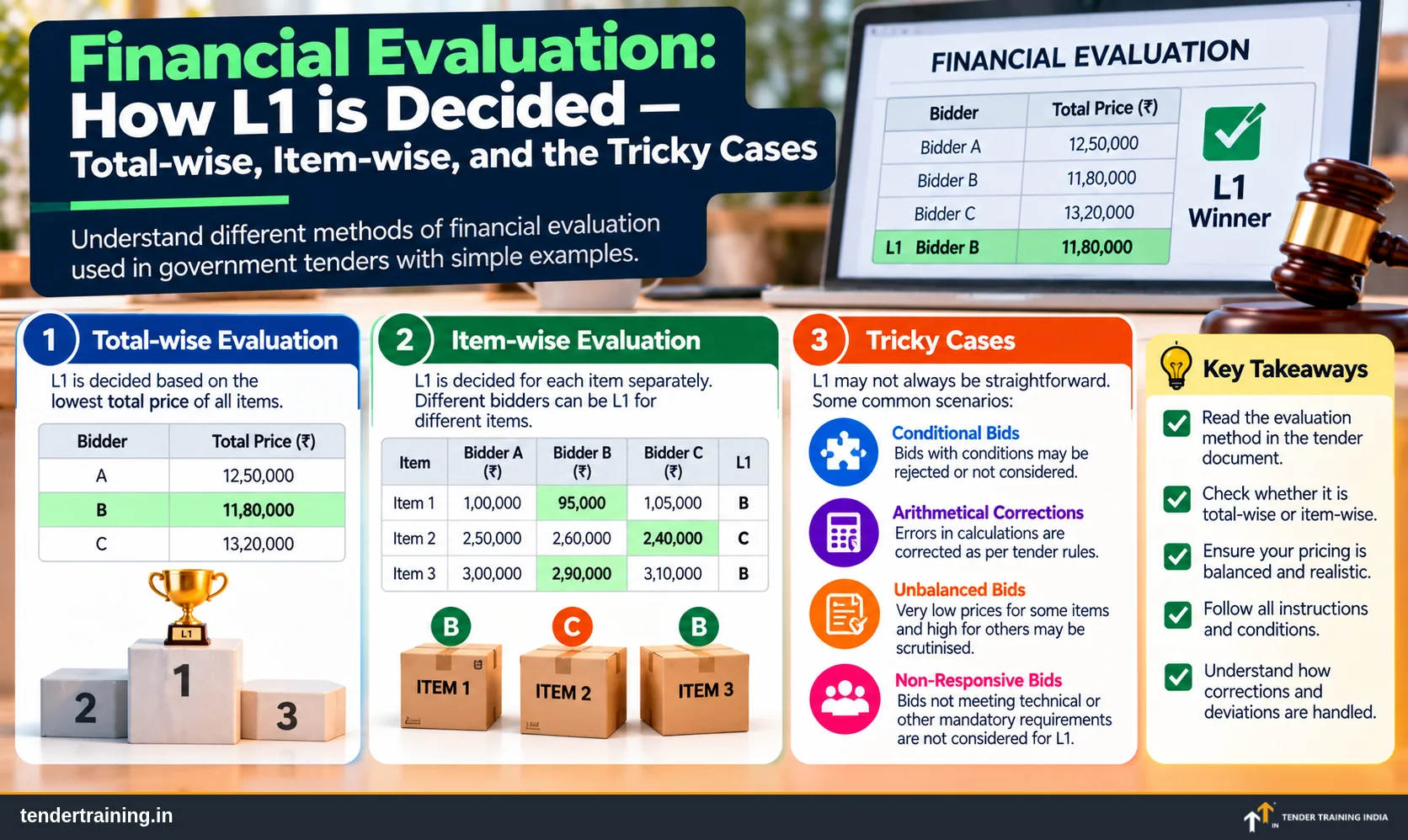
How L1 is decided: total-wise vs item-wise evaluation, what happens when prices are too high or too low, and how ties are handled.
44 more articles — on tender terms, the bidding process, GeM, IREPS and digital signatures — are on the way.